For whiskey lovers and newcomers, understanding the difference between malt whiskey and grain whiskey is key. The main difference is in the ingredients and how they’re made. Malt whiskey is made from malted barley, using a traditional method. This process creates a rich taste, with notes of caramel and toffee.
Grain whiskey, on the other hand, can be made from different grains. This includes corn, wheat, rye, and unmalted barley. It offers a wide range of flavors, from sweet corn whiskey to spicy rye whiskey. The way it’s made, using a continuous still, makes it strong and versatile.
Exploring the malt whiskey vs grain whiskey difference deepens our appreciation for both. Get ready to explore the rich heritage and flavors of malt and grain whiskey.
Understanding Whiskey: A Brief Overview
Whiskey is a beloved spirit known for its rich flavors and diversity. The distillation process is key in turning simple grains into complex whiskeys. This process boosts the alcohol and refines the taste, making each whiskey unique.
Scotch, bourbon, and rye are just a few whiskey types. They differ in grain, distillation, and where they’re made. Scotch gets its smoky taste from malted barley, while bourbon is sweet, mainly from corn. Each type follows strict rules to ensure its quality.
The way whiskey is distilled can change its taste. Some use old pot stills for batch distillation, while others use modern stills for steady production. Knowing about whiskey types and how they’re made can deepen your appreciation for this drink. It’s a journey into the art and science of whiskey-making.
The Origins of Malt and Grain Whiskey
The origins of malt whiskey and origins of grain whiskey are filled with a rich historical context. This context sets them apart with unique production methods and tastes. Malt whiskey, mainly from Scotland and Ireland, uses barley. This grain is key because it’s plentiful and adds a special flavor to the whiskey.
On the other hand, grain whiskey has a more industrial start. It uses many grains, making it cheaper and easier to make lots of whiskey. Scotland, for example, is known for improving grain whiskey. Distilleries like Loch Lomond and Girvan have made Scotch grain whiskey even better.
Knowing where these whiskeys come from helps us see their differences. As the world changes and new markets open, the stories of malt and grain whiskey keep growing. They blend old traditions with new ideas.
What Defines Malt Whiskey?

The heart of malt whiskey is its pure ingredients and old-fashioned making ways. Unlike other spirits, malt whiskey only uses malted barley. This key ingredient is crucial for fermentation and for the malt whiskey characteristics that fans love.
These traits include rich, complex tastes with a touch of sweetness and a smooth, smoky end.
When making malt whiskey, malted barley is ground into grist and mixed with water. Then, it’s heated for fermentation. The use of traditional pot stills is key, as it brings out the whiskey’s delicate flavors.
Distilleries like Kilchoman use this method to improve the whiskey’s flavors and smells. After distillation, the spirit is aged in oak barrels. This step adds the whiskey’s color, depth, and a hint of woodiness.
The malt whiskey production process keeps the malted barley pure while making it better. It creates a drink that lets you explore the lands and skills behind it. Aging the whiskey in different barrels adds more character to each sip, showing the whiskey’s rich history and craftsmanship.
What is Grain Whiskey?
Grain whiskey stands out because it’s made from different grains like wheat, corn, rye, and unmalted barley. These grains can be distilled alone or mixed together. This mix creates a rich flavor in the whiskey.
The production of grain whiskey uses modern column stills. These stills help make whiskey continuously and at a higher proof. This is different from malt whiskey, which is made in batches.

Grain whiskey is known for its flexibility in distillation and aging methods. Places like Kilbeggan and Teeling are leading the way. They use these grains to create unique tastes.
These grain whiskey features show a new way of making whiskey. It combines old and new methods to offer a fresh whiskey experience.
Key Differences Between Malt and Grain Whiskey
Exploring malt and grain whiskey shows big differences in taste and making. Malt whiskey vs grain whiskey taste profiles are quite different. Malt whiskey has rich flavors of caramel and toffee. This comes from the careful pot stills method, which is key to its unique taste.
Grain whiskey, on the other hand, has a wide range of flavors. Its taste can be sweet or spicy, depending on the grains used. The malt vs grain whiskey production methods also vary. Grain whiskey uses column stills for continuous distillation, which keeps the grain flavors and makes it unique.
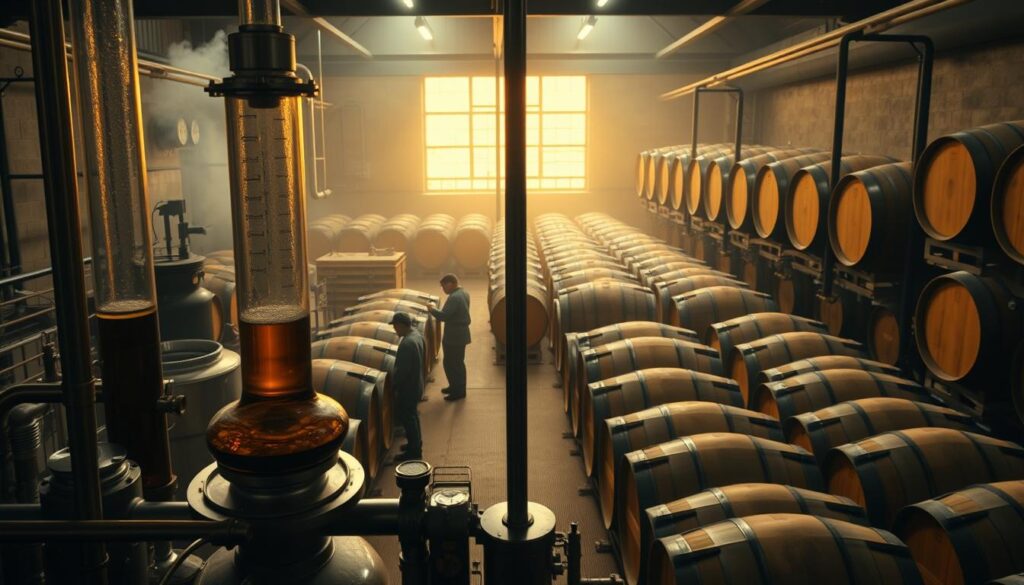
Choosing between malt and grain whiskey depends on flavor and making method. Whether you like the sweet notes of malt or the varied taste of grain, these differences matter. They help you pick and enjoy your whiskey.
The Role of Barrels in Aging Whiskeys
The impact of oak barrels on whiskey is huge. They greatly change its taste and add complexity. Oak barrels, made from American or European oak, are key in aging whiskey. They give whiskey flavors like vanilla, toffee, and spices, making each whiskey unique.
Experts have found that aging times differ for each type of whiskey. Using new or used barrels, like those for bourbon or sherry, adds special flavors. Used barrels bring deeper, richer tastes that new oak can’t match, making whiskey more complex.
Also, oak barrels do more than just add flavor. They also change the whiskey’s color, smell, and feel. The longer whiskey ages, the more oak flavors it gets.
Whiskey makers carefully control aging to get the right taste. They adjust time and materials to perfect the whiskey. Oak is not just a container; it’s a key ingredient that makes whiskey better.
Tasting Malt vs. Grain Whiskey
Starting your journey with tasting malt whiskey and tasting grain whiskey opens a world of flavors. Both have unique tastes shaped by their making and history. Learning how to properly taste whiskey is more than just drinking it. It’s about diving into the special qualities of each.
When you taste malt whiskey, expect a mix of sweet and nutty flavors. This comes from malting barley the old way. These whiskeys are strong and rich, thanks to the malt.
Tasting grain whiskey gives you a lighter, sweeter taste. It’s great for beginners because it’s smoother.
Learning to taste whiskey right means using the right glass. A tulip glass helps you smell the whiskey’s scents better. Start by smelling, then sip slowly to enjoy the flavors. Think about the aftertaste too, which should be nice and long.
Pairing whiskey with food makes tasting even better. A strong malt whiskey goes well with rich foods like steak or blue cheese. Grain whiskey pairs well with lighter foods like salmon or chocolates. This makes both the drink and food taste even better.
Whether you like the bold taste of malt or the softness of grain, whiskey tasting is a rewarding journey. It shows you the history and skill behind each whiskey. Every glass has a story to tell.
Popular Brands to Explore
Exploring the world of whiskey can be exciting. Discovering the best malt whiskey brands and top grain whiskey distilleries can make your tasting experience better. Malt whiskey brands like The Glenlivet and Kilchoman are known for their quality and taste.
The Glenlivet is famous for its smooth, fruity flavors. It’s a must-have for whiskey fans. Kilchoman, from Islay, adds a peaty flavor, making it unforgettable.
Grain whiskey has its own stars, like Suntory’s Chita and Haig Club, backed by David Beckham. Chita is known for its sweet, honeyed taste. Haig Club has a woodier flavor. For those who like both, Chivas Regal and Johnnie Walker Red are great. They blend malt and grain whiskeys perfectly, offering complex tastes.
Whether you’re new to whiskey or have been drinking it for years, these brands are a great place to start. They help you understand and enjoy different whiskey styles.
Food Pairings with Malt and Grain Whiskey
Exploring whiskey can take you beyond the glass into the kitchen. Food pairings with malt whiskey and food pairings with grain whiskey are exciting. Malt whiskey’s deep flavors pair well with smoky meats like brisket or steak. The charred edges and juicy centers of these meats are enhanced by the whiskey’s complex notes.
Strong cheeses like Stilton or Gouda also match well with malt whiskey. Their rich taste mirrors the whiskey’s character. Dark, intense chocolate flavors also pair well, blending with the whiskey’s wood and spiced undertones.
Food pairings with grain whiskey offer a lighter contrast. Grain whiskey’s subtle and sweet notes pair well with seafood. Try butter-grilled scallops or a fresh shrimp cocktail with a glass of grain whiskey.
For a sweet treat, light pastries or creamy custards are great matches. Their sugary, soft textures are complemented by the whiskey’s subtle sweetness. Even fresh fruit like sliced pears or crisp apples can enhance the whiskey experience, echoing its fruity or floral undertones.
Whether you prefer the bold flavors of malt whiskey or the gentle touch of grain whiskey, the right food pairing makes every moment special. It brings friends and flavors together in unforgettable harmony.
Making the Right Choice
Exploring whiskey is an art. It’s about finding the right whiskey for your taste and the moment. Malt whiskey is perfect for special times. It’s complex and aromatic, great for savoring neat or with a bit of water.
Grain whiskey, with its lighter taste, is ideal for cocktails. It’s great for any party, pleasing both experts and newcomers. Whether it’s a lively event or a casual get-together, grain whiskey is a versatile choice.
Your choice of whiskey depends on its flavor and how it’s made. Whether you prefer the rich taste of malt or the mixability of grain, knowing your whiskey is key. This knowledge helps you pick the perfect whiskey for any event.